Algae · 28 steps · 40 pages · instant PDF · $10.00
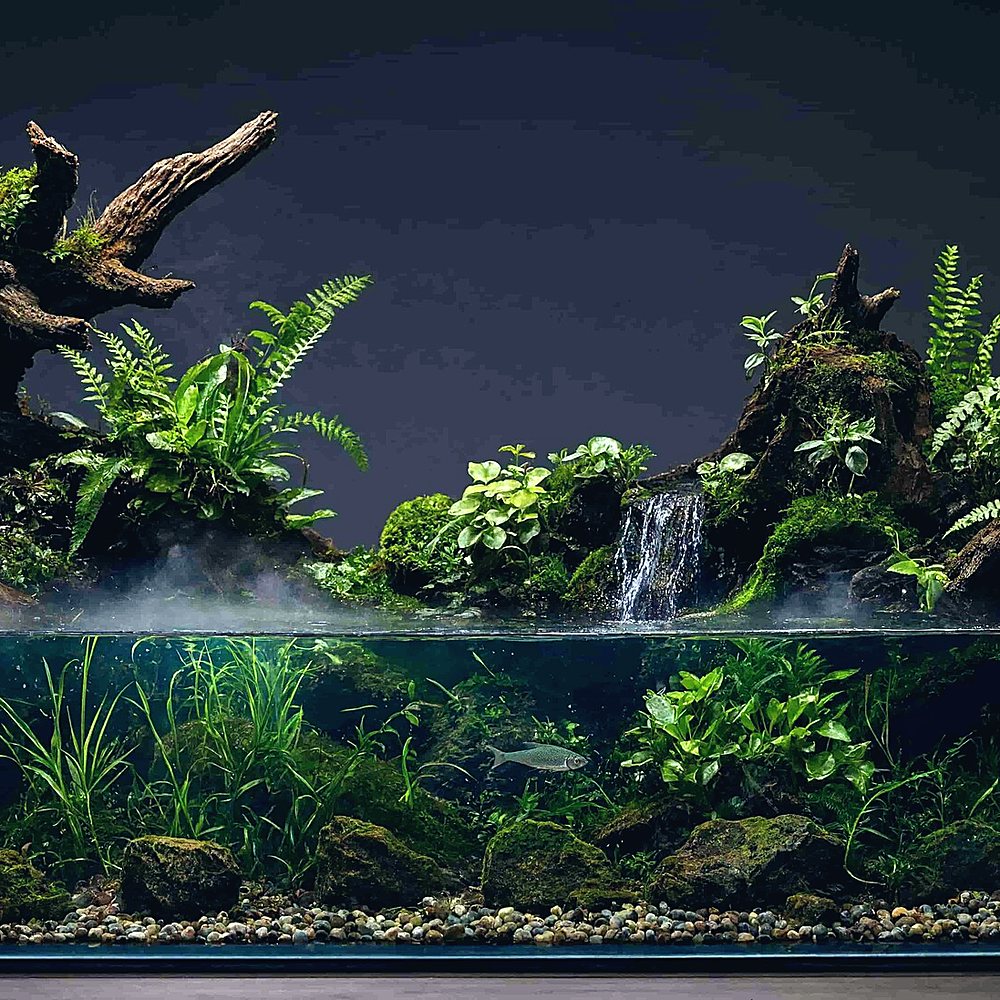
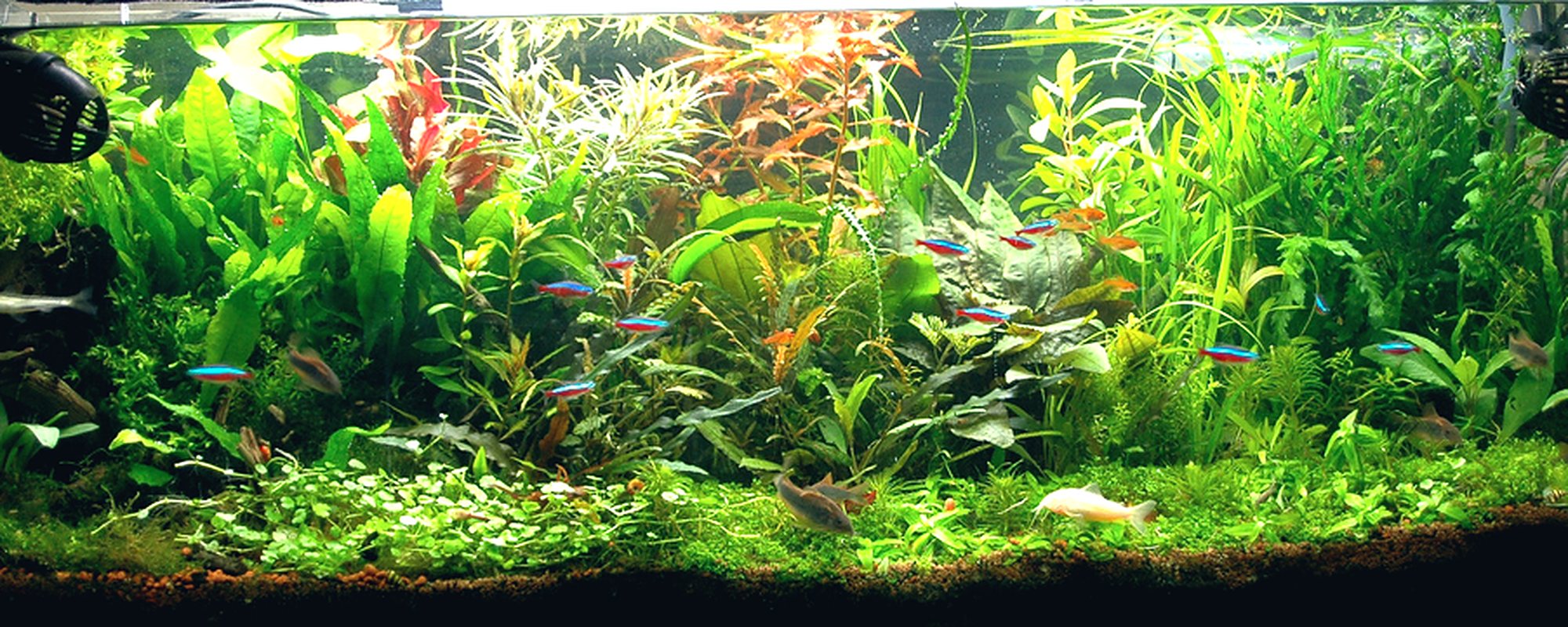
A planted tank, seen wide

The algae

Algae isn't dirt. It's your light bill coming due.

Algae spores are in every tank, always. They grow when light and nutrients go unused, which is why scrubbing never ends it and why the first move is always free. Six types, what each one means, and the one change that resolves most outbreaks.

$10.00 one-time payment · instant PDF download · 60-day money-back guarantee

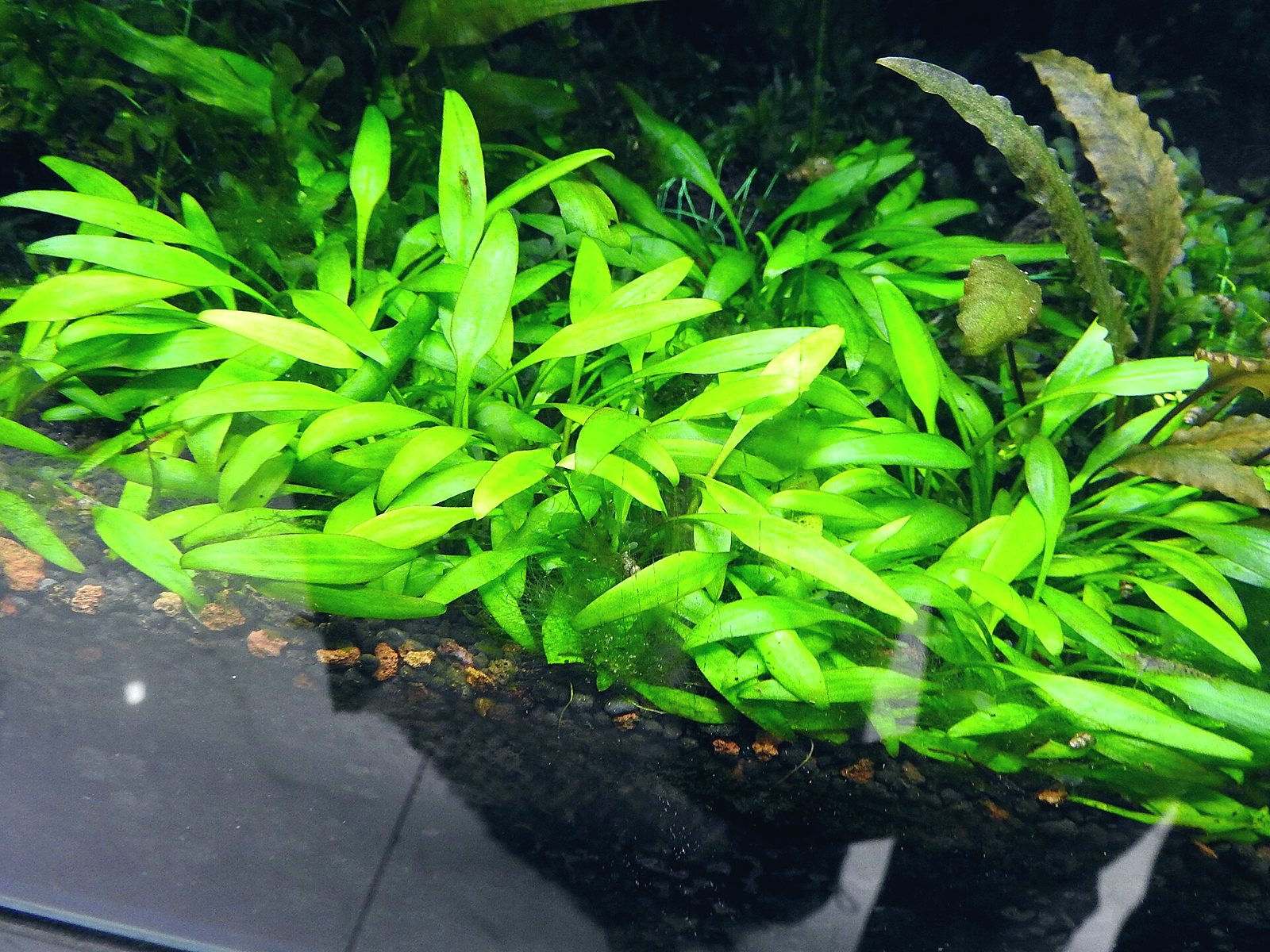
A planted tank, seen wide
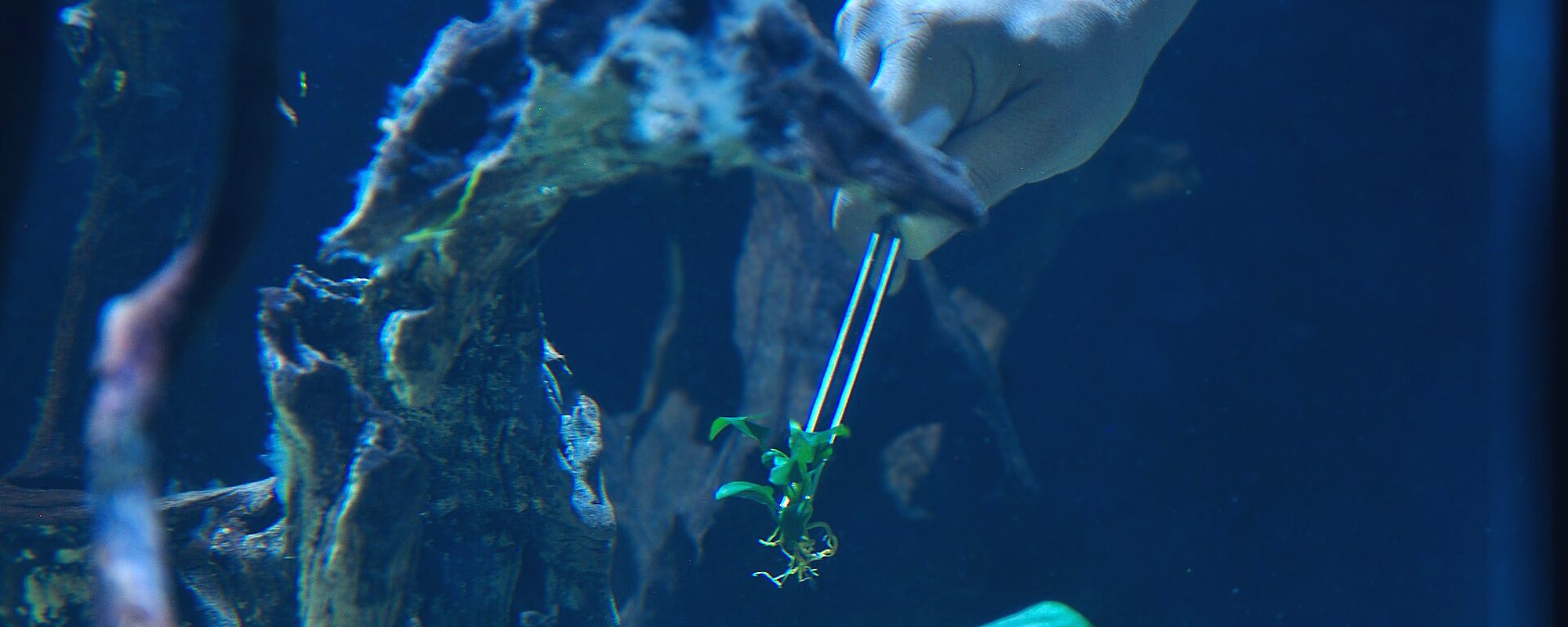
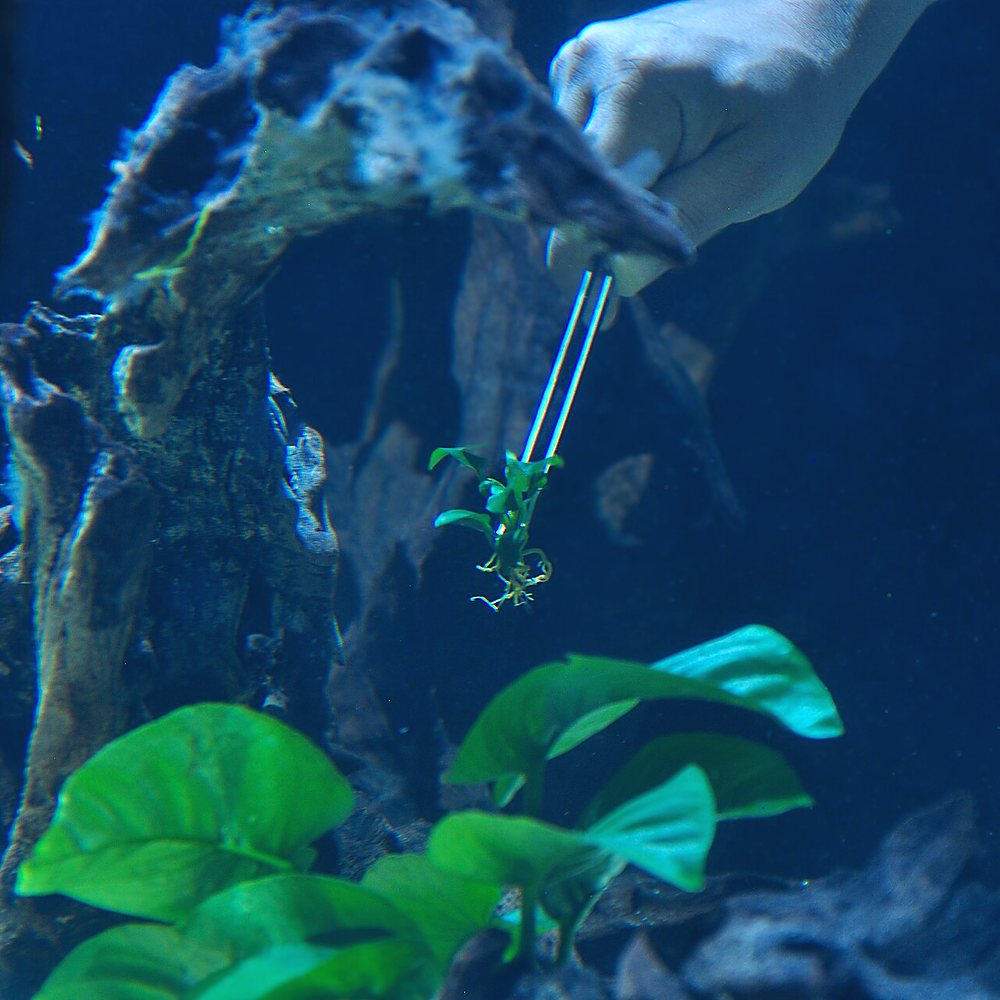
Anubias leaves in low light

Free, instant, reversible

Take an hour off the photoperiod.

It's the first move in every outbreak, in every tank, and it resolves more of them than everything else put together.

Yes — tell me which one I've got — only $10.00One-time payment · 60-day money-back guarantee
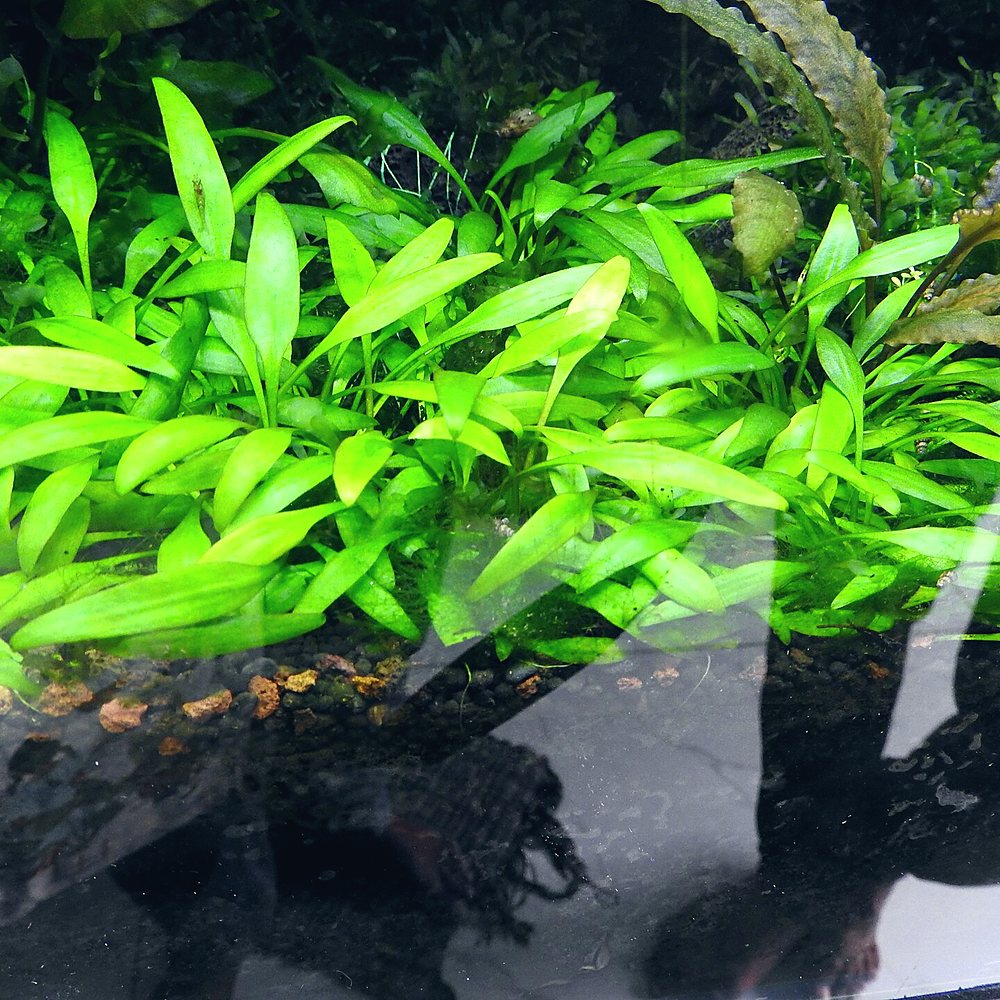
Aquarium plants, close

Sound familiar?

You clean it off, and two weeks later it's exactly the same?

That's not a cleaning failure. It's the mechanism working as designed.

Algae grows where there's light and nutrient that nothing else is using. Killing what's visible changes neither, so the same algae comes back on the same schedule, for as long as you keep treating it.

Worse, a mass die-off is a mass of decaying matter in the tank at once — an ammonia load and an oxygen draw on top of the original problem.

What you get out of it

Identify first, then change one thing.

Six types, five causes, and a first move that costs nothing and is reversible.

01 Anubias leaves in low light

How to tell six common types apart, and what each one says about your tank

02 Aquarium plants, massed

Why the brown dust in a new tank needs no treatment at all

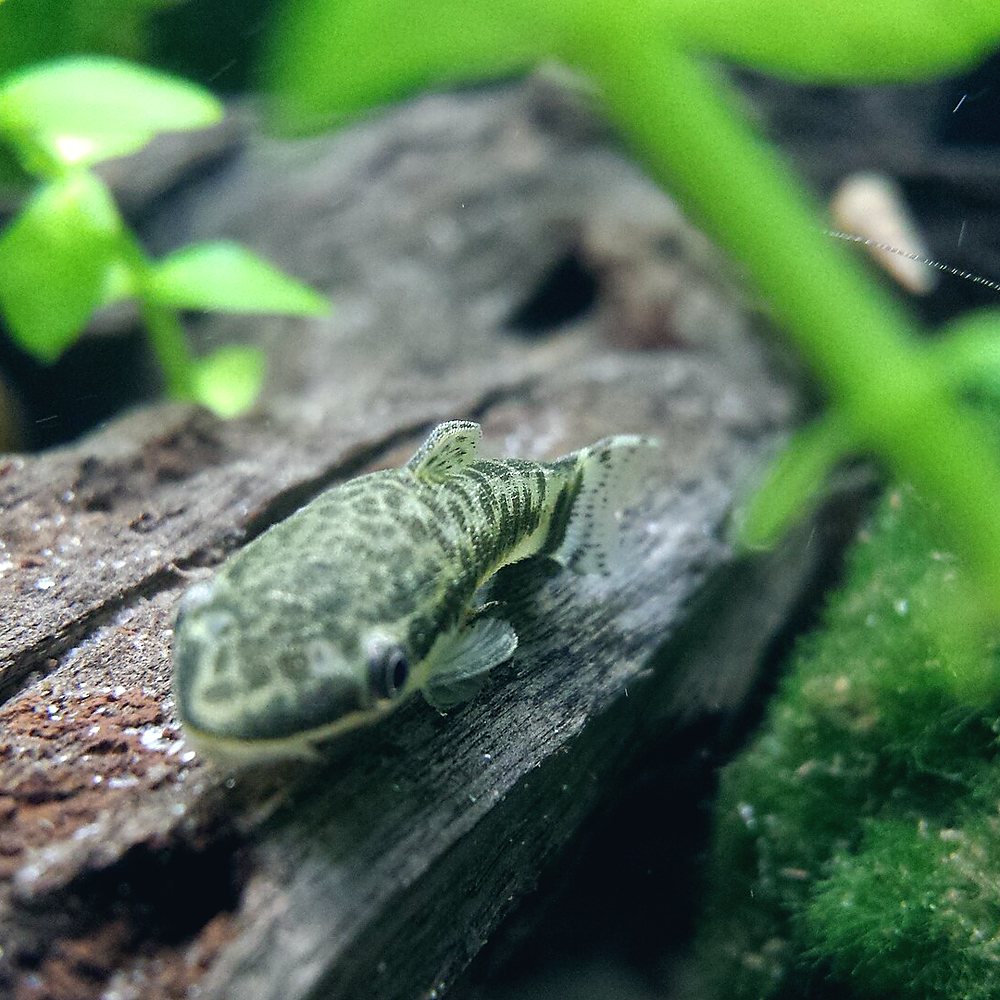
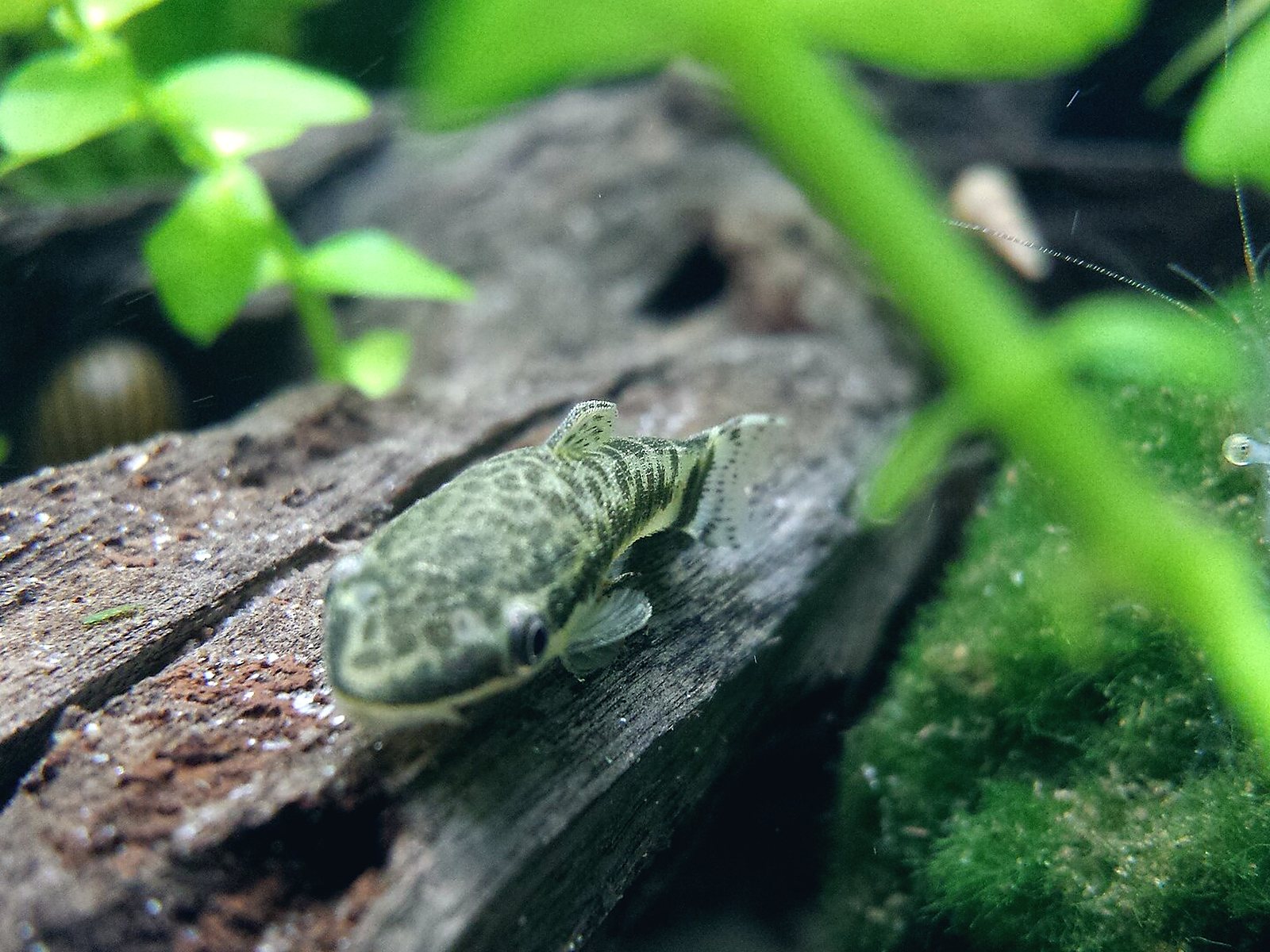
03 An otocinclus on wood

The green film where cleaning the glass more often genuinely makes it worse

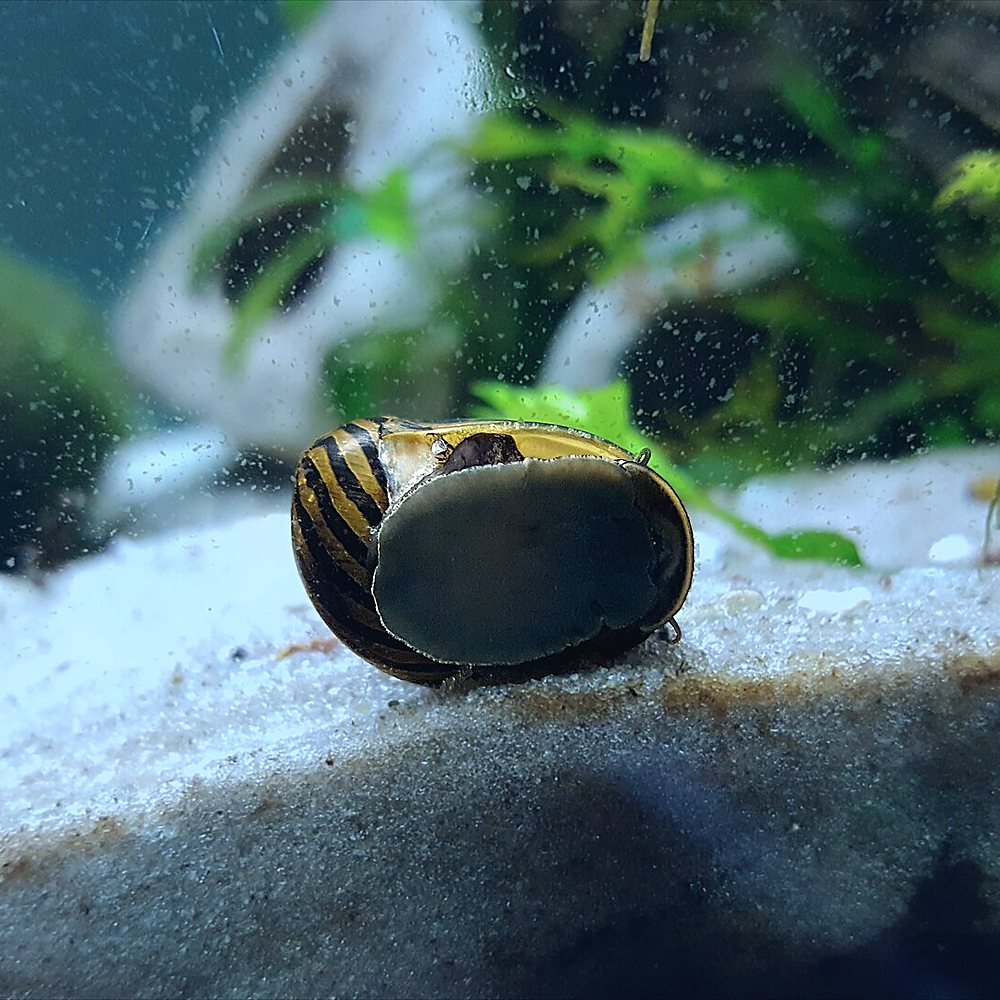
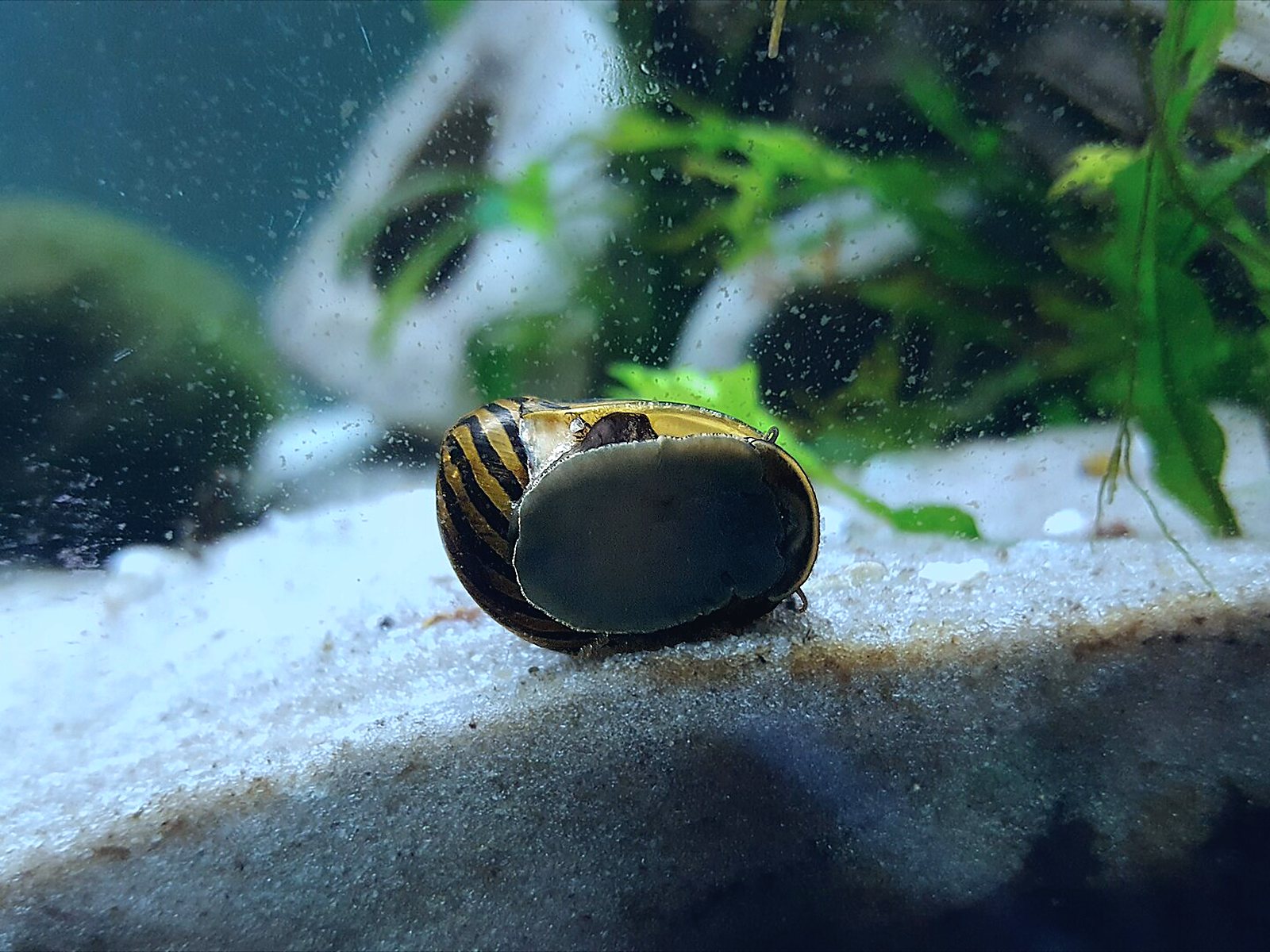
04 A nerite snail on sand

The five causes, in the order they're actually responsible

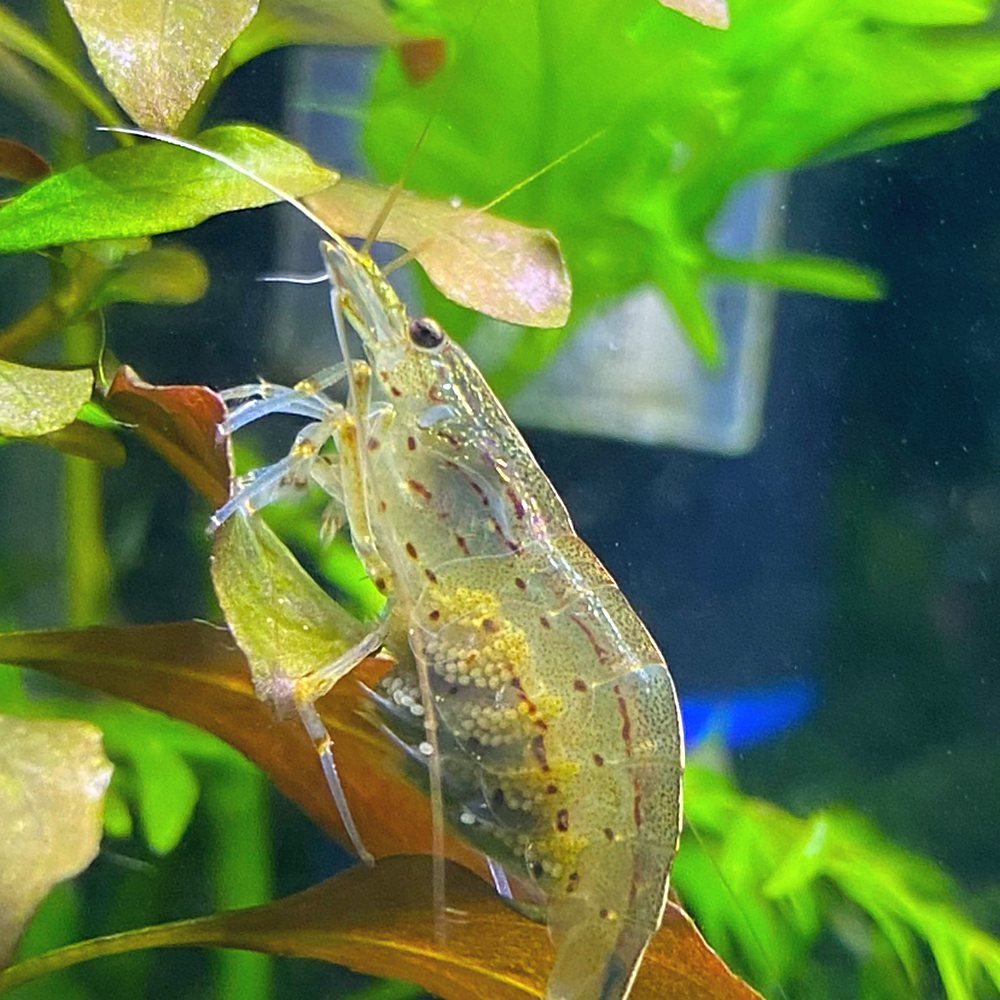
05 A shrimp on a plant stem

How to remove algae physically so the nutrients leave the tank with it

06 An aquascape, planted

The blackout: three days, exactly how, and the two problems it works on

Yes — tell me which one I've got — only $10.00$10.00one-time · 60-day money-back guarantee

$10.00 one-time payment · instant PDF download · 60-day money-back guarantee

When it is a vet, not a book: If fish are dying, gasping at the surface, hanging at the top or lying on the bottom, if they have visible wounds, growths, cloudy eyes or a bloated body, if they stopped eating, or if several went wrong at once: test the water today, stop feeding, add nothing to the tank, and take the numbers and a clear photograph to a veterinarian who treats fish or a specialist aquatic shop. There is no medication in this collection and there never will be.

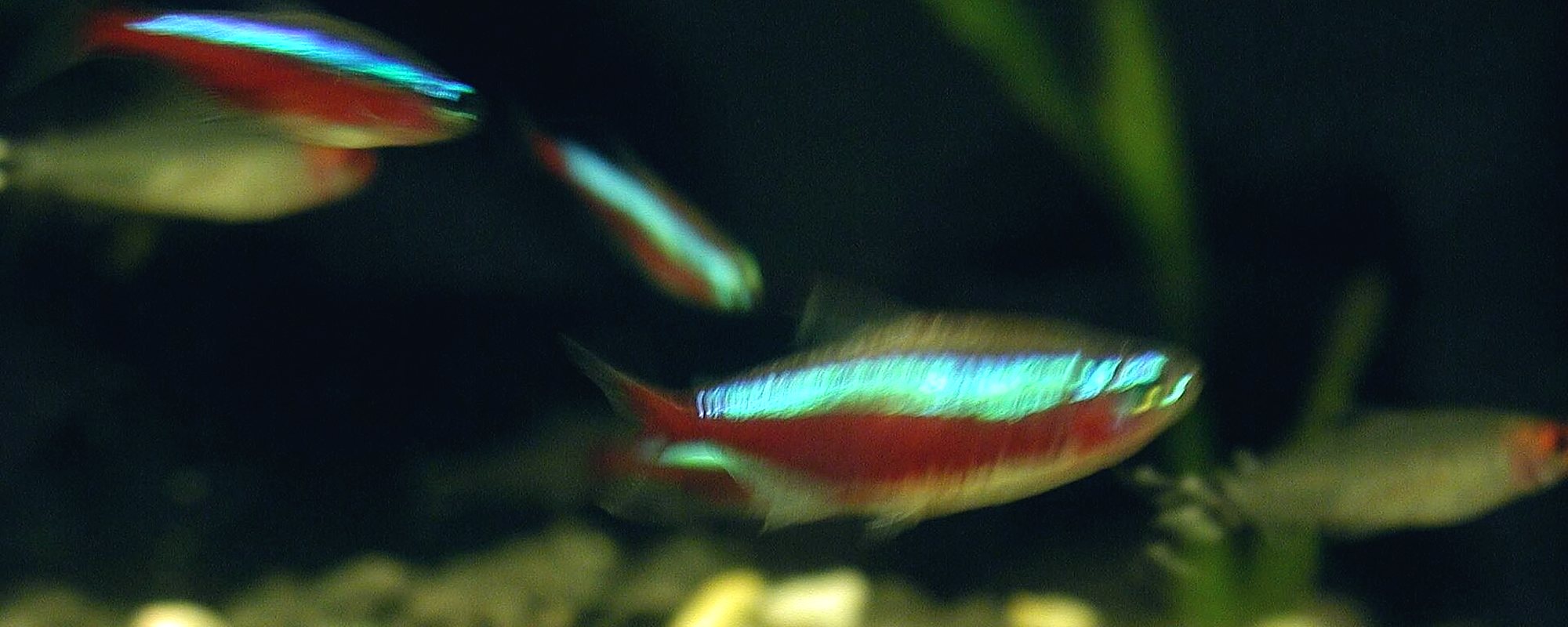
Cardinal tetras, shoaling

The one where cleaning makes it worse

Green film? Leave the glass alone.

It has a spore cycle, and wiping it halfway through puts fresh spores into the water. Three weeks, then wipe thoroughly and siphon it out.

Yes — tell me which one I've got — only $10.00One-time payment · 60-day money-back guarantee
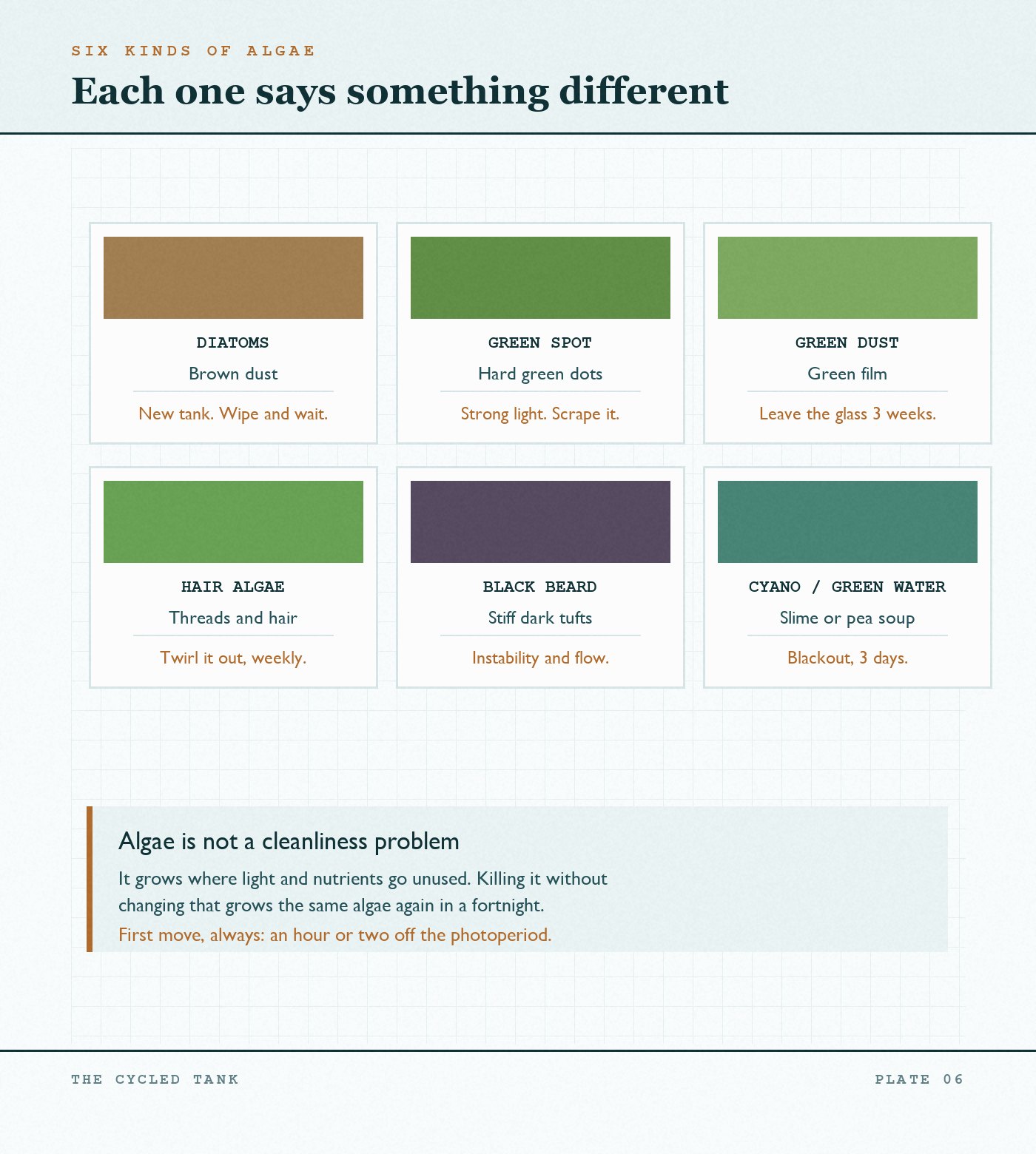
The Algae Problem — a drawn plate

What is inside

Twenty-eight steps, six chapters, 40 pages

Twenty-eight numbered steps, one page each, with the identification, the cause and the action written down.

Inside the file

Twenty-eight steps, six chapters, 40 pages

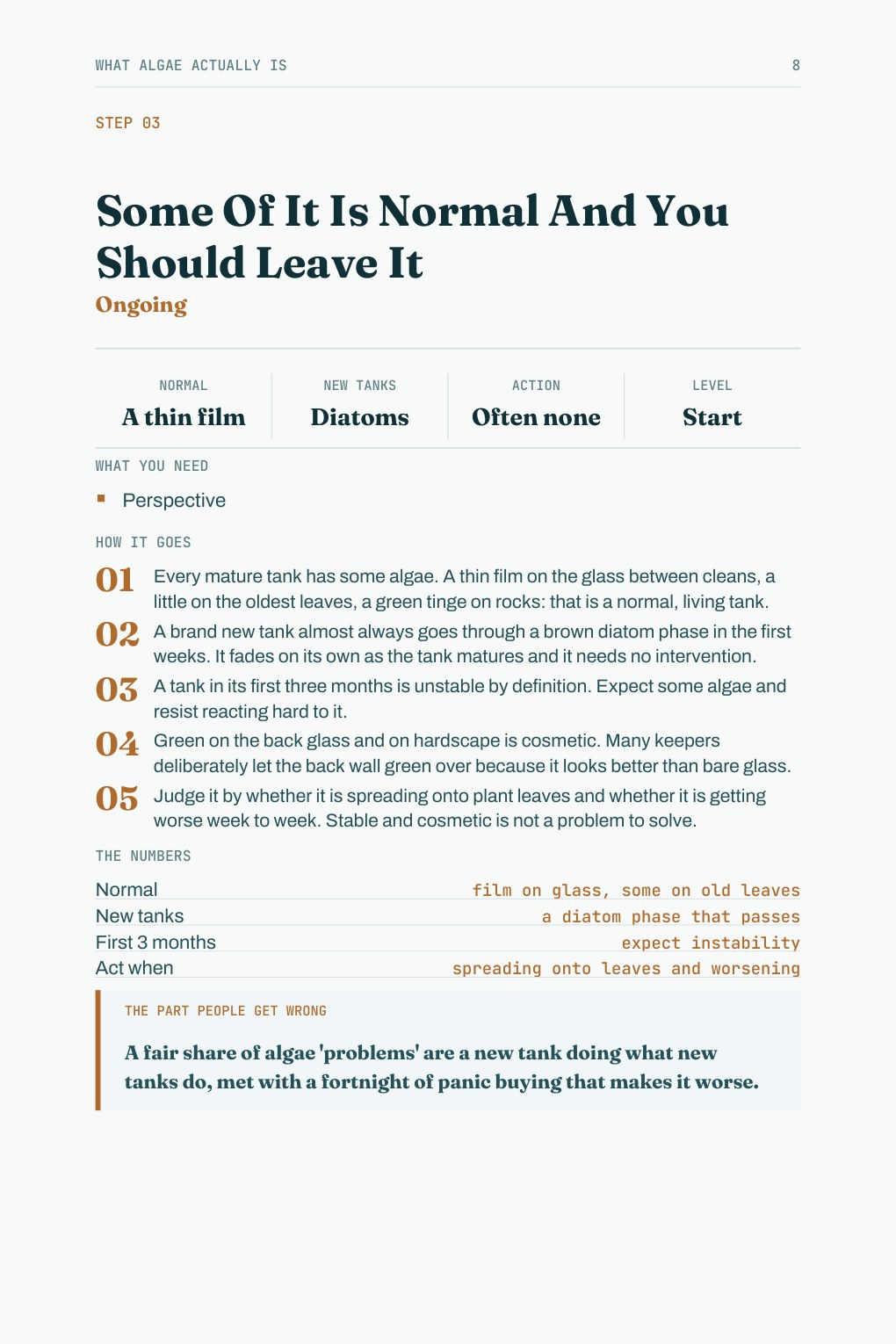
A page from the The Algae Problem PDF
An actual page from the PDF, at full size
  • What algae actually is — a competition, not a cleanliness problem, and why some of it is normal
  • Identify what you have — diatoms, green spot, green dust, thread, black beard, slime and green water
  • The causes, honestly — light, nutrients, instability, dead spots, and what changed
  • Getting it out by hand — removal before the siphon, hardscape in a bucket, and the blackout
  • The cleanup crew myth — what they eat, the pleco mistake, and feeding them afterwards
  • Preventing the next one — the timer, the pinch, the plants, the boring routine

What you get

A 40-page PDF, 6 × 9 inches

Twenty-eight numbered steps, one page each, with the identification, the cause and the action written down.

  • Steps28
  • Chapters6
  • Pages40
  • Format6 × 9 in
  • One page per step, with the cause and the action printed on it
  • A drawn plate of six algae types side by side
  • A whole chapter on the animals sold as the fix
  • Prints on ordinary paper, reads fine on a phone
An otocinclus on wood

Twenty-eight steps, one page each

What it is, what caused it, what to do.

Every type has its identification, the condition it indicates, and the specific removal method that works on it.

Yes — tell me which one I've got — $10.00One-time payment · 60-day money-back guarantee

Six kinds identified, five causes named, and what actually removes them.

A 40-page PDF, 6 × 9 inches

Twenty-eight numbered steps, one page each, with the identification, the cause and the action written down.

Identify what I have$10.00one-time · 60-day money-back guarantee

60days

60-day money-back guarantee

If the ebook is not what you expected, write within 60 days and you get your money back in full. You keep the file. No form, nothing to return, and you do not have to explain why.

Important purchase information

Delivery
A digital ebook in PDF form. Right after your purchase you receive an email with a secure download link, and the same link on the page you land on. Nothing is shipped.
What it is
Educational material about keeping a freshwater aquarium. Not veterinary advice, and no promise that any fish will live.
Payment
One-time payment of $10.00. No subscription and nothing further to buy.
Refund
60-day money-back guarantee, in full, with the file kept.
Anubias leaves in low lightAquarium plants, massedAn otocinclus on woodA nerite snail on sand
A nerite snail on sand

Ten dollars, once

No subscription. No upsell. No list.

One payment, instant download, and 60 days to get your money back. You keep the file either way.

Yes — tell me which one I've got — $10.00One-time payment · 60-day money-back guarantee

Questions people actually ask

What's the brown dust in my new tank?

Almost certainly diatoms, which are close to universal in new tanks and fade on their own over weeks. Wipe the glass, siphon what settles, and buy nothing.

Will an algae eater solve this?

No. It eats some algae and changes none of the causes, and it adds bioload, which adds nutrients. The book has a chapter on why, including the fish most often sold for this that outgrows every home tank.

Does an algaecide work?

It kills what's visible and leaves the cause untouched, so the same algae returns. It also drops a mass of decaying matter into the tank at once.

My plants are covered in it.

That means the plants are growing too slowly to compete, usually because there's more light than their nutrients and carbon can support. Cut the worst leaves off and shorten the photoperiod.

What format is it?

A PDF, 6 × 9 inches. Phone or print.

What if I hate it?

Email within 60 days and you get your money back in full. You keep the file.

A planted tank, seen wide

One payment, and it is yours

Identify it, then fix the cause

Twenty-eight steps from what it is to why it won't come back.

Yes — tell me which one I've got — only $10.00One-time payment · 60-day money-back guarantee

This is educational material about keeping a freshwater aquarium. It is not veterinary advice, it does not diagnose anything, and it does not treat anything. There are no medications, doses or treatment protocols anywhere in this collection. Sick or dying fish mean a water test today and a veterinarian who treats fish, or a specialist aquatic shop, in person. No book can promise you that a living animal will survive.

The Algae Problem $10.00 one-time · 60-day money-back guarantee
Yes — tell me which one I've got — $10.00Get it — $10.00